When should a rental shop pull equipment from the booking calendar for maintenance?
Every hour a unit sits in the shop is an hour it cannot earn, but a breakdown mid-rental costs far more. A practical framework for deciding when to block gear for service.
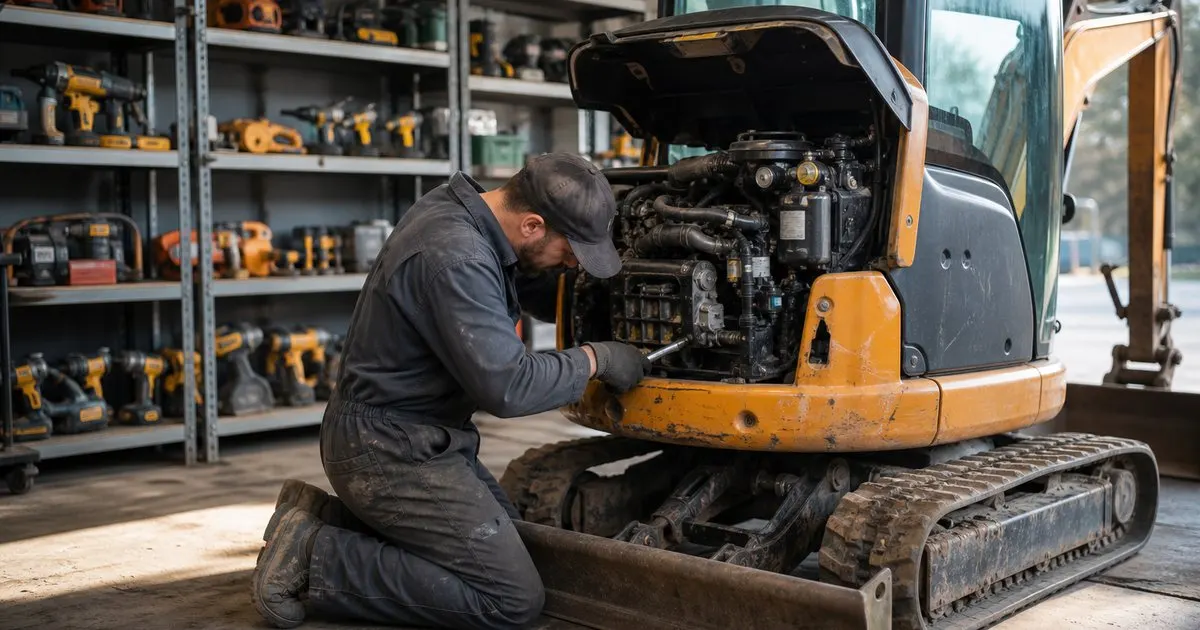
Separate scheduled service from condition-triggered service
There are two very different reasons to take a unit off the calendar. Scheduled service follows the manufacturer's interval, usually by engine hours, cycles, or elapsed months, and it is predictable enough to plan around slow periods. Condition-triggered service is what the check-in inspection uncovers: a frayed hose, a battery that no longer holds charge, a tent pole bent on the last job. The first type can be timed. The second cannot, and pretending it can is how units go back out with known faults.
Treat these as separate workflows. Scheduled service lives on a recurring plan tied to the hour meter or the calendar, and it gets booked into the availability system like any other reservation so nobody can rent the unit during that window. Condition-triggered service is a status flag applied at check-in that immediately removes the unit from anything bookable until a technician clears it. Mixing the two leads to units that are technically due but still rentable, which is the worst of both.
Keep reading: How do small rental businesses prevent double bookings on popular equipment?, What should an equipment rental checkout and return checklist actually include?, Why do damage deposits matter for tool camera and party rental businesses?. See how GearRentr helps you equipment rental booking and availability.
Use hour meters and rental counts, not just dates
A generator that has done a hundred hours in a month and one that has done five are in completely different states even if they were bought the same day. For anything with an engine, hydraulics, or a motor, log the meter reading at every check-in and set service thresholds by hours. For gear without meters, such as tables, lighting, or hand tools, rental count is a reasonable proxy: after a set number of outings, the unit gets a deeper inspection regardless of what the last check-in found. Related: What should an equipment rental checkout and return checklist actually include?
Recording the meter at check-in does double duty. It catches the customer who ran a unit far harder than the rental period suggests, and it gives you the data to forecast service windows weeks ahead. If a unit averages twenty hours per rental and the next service is due in fifty, you know it has roughly two more bookings before it should be blocked, and you can plan the block around existing reservations instead of cancelling one. Related: How do small rental businesses prevent double bookings on popular equipment?
Time the block around demand, not around convenience
The instinct is to service gear when the shop is quiet, which often means during the same slow week when every unit is available anyway. That is fine for scheduled service. The harder decision is a unit that is nearly due during peak season with bookings stacked behind it. Pulling it costs confirmed revenue; running it risks a failure in a customer's hands, a refund, a replacement delivery, and a bad review. In practice the failure scenario is almost always more expensive than the lost booking. Related: How can a small rental shop reduce no-shows for reserved equipment bookings?
A middle path is to shorten the block rather than skip it. Many service tasks can be split: a fluid change and a belt inspection can happen in an evening, with the longer teardown deferred to the next gap in the calendar. Talk to whoever does your service about what can be staged. Then block the unit for exactly the window needed and mark the remaining tasks as due at the next natural gap.
Make the blocked status visible everywhere at once
The single most common maintenance failure in small shops is not skipping service. It is a unit that is in pieces on a bench while the website still shows it available. If your booking calendar and your service tracking are different systems, or a whiteboard and a spreadsheet, someone will forget to update one of them. The unit must be unbookable the moment a technician starts on it, and bookable again only when they sign off.
This is also where an honest customer message matters. If an existing reservation has to move because a unit failed inspection, tell the customer immediately, offer a comparable substitute or a different date, and note the reason. Customers are far more forgiving of a shop that pulled a unit for safety than one that handed over gear that died on site. Keep a simple log of every pulled unit, the reason, and the downtime, because that history is what tells you which items to retire early. Related: What booking details do customers expect to see when reserving rental gear?
- Run scheduled service on meter hours or rental counts, and treat condition-triggered service as an immediate status flag from check-in.
- Log hour-meter readings at every return so service windows can be forecast around existing bookings.
- In peak season, split service into a short mandatory block and a deferred deeper job rather than skipping it.
- The unit must become unbookable in the same system customers see the moment work starts, not when someone remembers.

Julien Jimenez
Julien Jimenez is an independent software builder based in Paris. He designs, ships, and operates focused SaaS products for small businesses and independent professionals. Read the full author page.
Book gear without double bookings
Equipment rental booking and availability. GearRentr is built to help you put this into practice.
Start freeMore from the GearRentr blog
How do small rental businesses prevent double bookings on popular equipment?

What should an equipment rental checkout and return checklist actually include?
Why do damage deposits matter for tool camera and party rental businesses?
Get the GearRentr playbook
Practical guides on equipment rental booking, straight to your inbox as we publish them. No spam, unsubscribe any time.