What is the best way to schedule equipment delivery windows around customer bookings?
Delivery turns a booking problem into a routing problem. How small rental operations set delivery windows that customers accept and drivers can actually hit.
Treat the delivery slot as part of the booking, not an afterthought
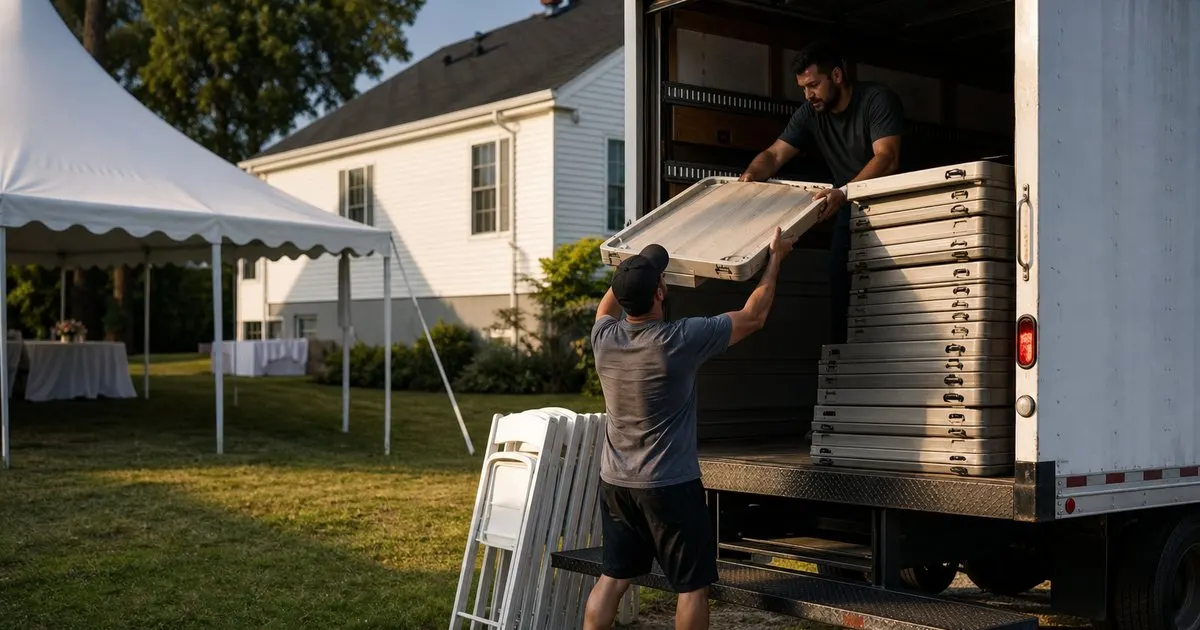
When a customer books a tent, a scissor lift, or a stack of chairs for delivery, they are really booking two things: the equipment for a date range and a truck plus crew for a specific window. Shops that record only the first end up with a driver's schedule reconstructed from sticky notes the night before. The delivery window needs to be captured when the reservation is made, with its own capacity limits, so that a Saturday morning does not end up with twelve deliveries and one truck. Related: Which condition notes should staff record before handing over rented equipment?
The practical way to do this is to give delivery its own calendar with a fixed number of slots per window, sized to your vehicles and crew. A booking that requires delivery consumes both an equipment slot and a delivery slot. If the delivery window the customer wants is full, they see that at booking time and pick another, rather than finding out by phone two days before their event. Related: How do small rental businesses prevent double bookings on popular equipment?
Keep reading: How do small rental businesses prevent double bookings on popular equipment?, What should an equipment rental checkout and return checklist actually include?, Why do damage deposits matter for tool camera and party rental businesses?. See how GearRentr helps you equipment rental booking and availability.
Size windows to your route density, not to customer preference alone
A two-hour window is easy to promise and hard to keep when stops are spread across a county. Shops with dense urban routes can offer narrower windows because travel between stops is short. Rural operations usually need half-day windows, or they need to group deliveries by zone and offer each zone only on certain days. Offering a narrow window you cannot reliably hit is worse than offering a wide one you always hit, because a missed window on event day is remembered for years.
One approach that works well for event and party rentals is to offer a firm delivery day with an approximate window, then confirm a tighter window the day before once the route is built. Customers get certainty on the day at booking, and precision once you know the full route. Communicate this two-step process clearly on the booking page so nobody expects a fixed hour when they reserve. Related: What booking details do customers expect to see when reserving rental gear?
Build in setup, teardown, and site access time
Delivery time is not just driving time. A tent needs setup, a lift may need a spotter and a check that the ground is level, and a backyard with a locked gate or a narrow side path can add half an hour. Capture site access details at booking: gate codes, stairs, whether a vehicle can reach the drop point, and who will be on site to receive the load. A driver arriving at a locked house is the most expensive ten minutes of the week.
Assign a duration to each delivery based on what is being delivered, not a flat time per stop. A load of chairs is a twenty-minute drop; a tent with sidewalls is a crew job that may take a couple of hours. When the delivery calendar accounts for these durations, the number of slots per window adjusts automatically and a single large setup does not silently overbook the morning.
Coordinate pickup windows with the next booking
Pickup is where delivery scheduling and availability collide. If a set of tables is due back Sunday evening but the truck cannot collect until Monday afternoon, those tables are not actually available for a Monday morning booking no matter what the calendar says. Availability for delivered items needs to run from the delivery departure to the pickup return, plus turnaround, not from the customer's event start to event end. Related: When should a rental shop pull equipment from the booking calendar for maintenance?
This is the argument for linking delivery and pickup slots to the reservation so the item's blocked period is calculated from real logistics. When a customer asks whether a tent is free for a Monday event, the answer should already account for whether Sunday's pickup will make it back in time. Shops that manage this well quote confidently. Shops that do not tend to say yes and then scramble.
- Capture the delivery window at booking with its own slot capacity so trucks and crews cannot be overbooked.
- Match window width to route density, and consider confirming a tighter window the day before once the route is set.
- Assign delivery duration by what is being delivered and collect site access details up front.
- Block item availability from delivery departure to pickup return plus turnaround, not just the event dates.

Julien Jimenez
Julien Jimenez is an independent software builder based in Paris. He designs, ships, and operates focused SaaS products for small businesses and independent professionals. Read the full author page.
Book gear without double bookings
Equipment rental booking and availability. GearRentr is built to help you put this into practice.
Start freeMore from the GearRentr blog

How do small rental businesses prevent double bookings on popular equipment?

What should an equipment rental checkout and return checklist actually include?
Why do damage deposits matter for tool camera and party rental businesses?
Get the GearRentr playbook
Practical guides on equipment rental booking, straight to your inbox as we publish them. No spam, unsubscribe any time.