Why does assigning a specific serial-numbered unit at booking time create avoidable scheduling problems?
Booking a class of equipment and assigning the physical machine at pickup keeps your calendar flexible. Here is when late assignment helps, and the cases where a serial number really does have to be locked in early.
A booking and a serial number answer two different questions
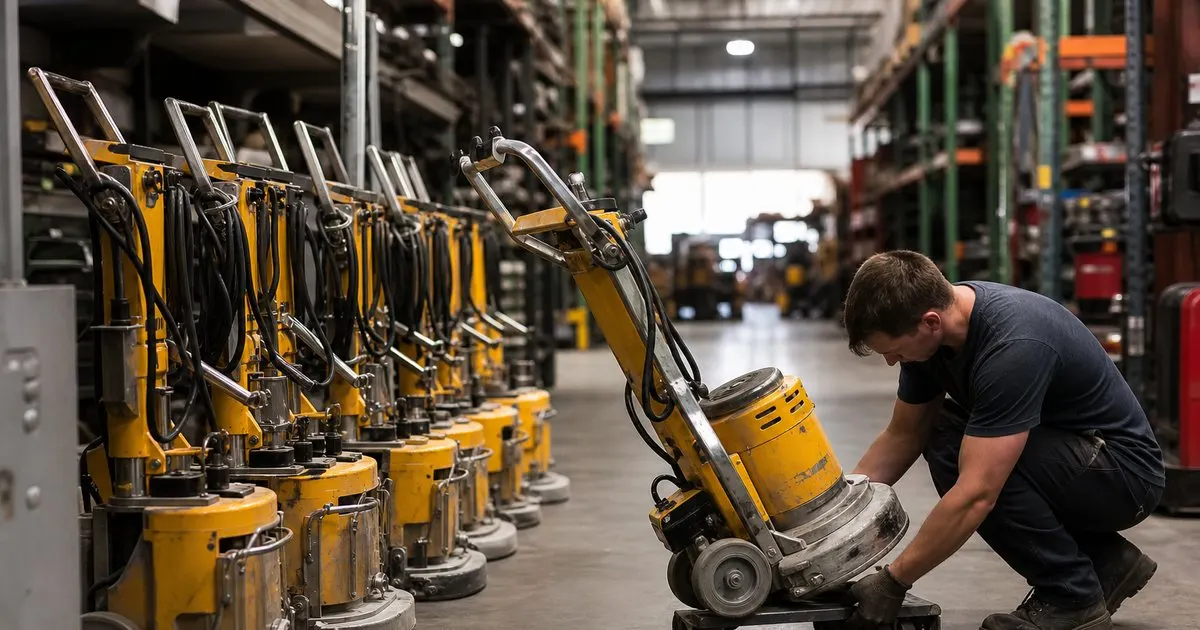
When a customer reserves a floor sander for Friday, they are asking whether you can hand them a working floor sander on Friday. They are not asking for machine number four. Availability, in other words, is a question about a class of equipment and a time window. The serial number is an operational detail that matters to you, for maintenance history and asset records, and it usually matters to the customer only after they have the machine in the truck. Related: How do small rental businesses prevent double bookings on popular equipment?
Systems that blur these two questions cause trouble because they force a decision at the moment you have the least information. On Monday you cannot know which of your five sanders will come back clean on Thursday afternoon, which one will need a new belt, or which one the delivery driver will have closest to the door. Deciding on Monday anyway means somebody has to undo that decision later, by hand, usually while a customer waits.
Keep reading: How do small rental businesses prevent double bookings on popular equipment?, What should an equipment rental checkout and return checklist actually include?, Why do damage deposits matter for tool camera and party rental businesses?. See how GearRentr helps you equipment rental booking and availability.
How early assignment quietly fragments your calendar
Pin bookings to named units and you create a scheduling puzzle nobody asked for. Suppose three customers each want a sander for two days across a week and you own three. Assigned by class, the calendar just checks that no more than three overlap at any moment. Assigned by serial, you can end up with two bookings stacked on unit one, an unusable one day gap on unit two, and unit three sitting idle while your software reports that nothing is free. The units exist, the capacity exists, but the reservation cannot be placed without a person rearranging the board.
The same rigidity turns ordinary hiccups into cascades. A customer returns unit two three hours late, and instead of quietly handing the next customer unit three, staff have to find the conflict, edit the original booking, and confirm that the swap did not break something downstream. Maintenance makes it worse: pull one machine for a repair and every booking pinned to it has to be reassigned individually, rather than the calendar simply showing one less unit of that class available for a stretch of days. Related: When should a rental business charge a late fee for returned equipment?
When a specific unit genuinely has to be locked in
Late assignment is a default, not a law. Some inventory is not interchangeable, and pretending otherwise causes its own failures. Trailers and towed equipment carry a plate and registration that appear on the contract. Items with certification or inspection dates, such as lifting gear and some aerial equipment, have to go out with the right paperwork attached to that exact unit. Machines that are nominally the same model can differ in ways that matter to a job, including hour meters, attachment fitments, power configuration, and whether a previous customer wore a cutting head to the end of its life. Related: What should an equipment rental checkout and return checklist actually include?
Customer commitments are the other case. If a contractor ran a job last month on a particular machine and wants the same one because the controls and quirks are familiar, that is a real request and worth honoring. So treat non-interchangeability as a property of the item rather than a rule for the whole catalog. Flag the units and categories that must be reserved by serial, let everything else book by class, and make sure staff can see which is which without asking anyone.
The practical middle: book the class, assign at the counter, record the serial
The setup that holds up in a busy shop is to reserve against a count for the class, including your turnaround buffer and any maintenance blocks, then assign the physical unit at the moment of handover and write that serial onto the rental agreement. Availability stays a simple comparison of overlapping reservations against units in service. Assignment happens when you can actually see the yard. And per-unit history still accumulates, because every checkout and return records which serial went out, what condition it was in, and what came back. Related: How can rental businesses track equipment availability across many overlapping bookings?
Two things are worth watching once you work this way. First, a class is only a class if the units really are equivalent, so resist quietly folding an older or smaller submodel into a pool because it is convenient during a busy week. Customers notice, and it becomes a return dispute. Second, keep your fleet count in the system honest. Pool booking is only safe when a unit that is out for repair, sold, or waiting on a part is removed from the available count that day, since the calendar has no other way to know it is gone.
- Reserve a class of equipment against a count, then assign the physical unit when the customer is at the counter.
- Early serial assignment leaves unusable gaps between bookings and turns one late return into a chain of manual swaps.
- Lock in a specific unit only where it truly matters, such as registered trailers, certified gear, or a repeat customer request.
- Pool booking is only as accurate as your in-service count, so remove units under repair from availability the same day.

Julien Jimenez
Julien Jimenez is an independent software builder based in Paris. He designs, ships, and operates focused SaaS products for small businesses and independent professionals. Read the full author page.
Book gear without double bookings
Equipment rental booking and availability. GearRentr is built to help you put this into practice.
Start freeMore from the GearRentr blog
How do small rental businesses prevent double bookings on popular equipment?

What should an equipment rental checkout and return checklist actually include?
Why do damage deposits matter for tool camera and party rental businesses?
Get the GearRentr playbook
Practical guides on equipment rental booking, straight to your inbox as we publish them. No spam, unsubscribe any time.